
New Hampshire's SEE Change Initiative: A Model of Family Engagement for Improved Outcomes
Updated April 16, 2026

Origins and Rationale
In 2015, the New Hampshire Early Intervention Program (NH EIP) wanted to change the culture of service delivery by helping providers and families understand the important role that caregivers have in supporting their child's development. The DEC Recommended Practices (RPs), which promote parent-child interaction across developmental domains, were the foundation upon which this work was built.
The goal was to:
- Transform practitioner mindset.
- Foster a better understanding of the RPs.
- Increase family involvement in services and child development.
As part of its State Systemic Improvement Plan (SSIP) work towards improved child and family outcomes, the staff began to meet with the Early Childhood Technical Assistance (ECTA) Center staff to receive technical assistance (TA) on strategies to integrate recommended practices to increase family engagement into their local programs and state system.
In December 2025, ECTA evaluation staff conducted an in-depth interview with NH EIP staff to learn more about their decade-long work. This is a summation of their process to plan, implement, and scale up the Sustainable Early Engagement for Change (SEE Change) Initiative to strengthen family empowerment, increase parent choice, and improve child outcomes.
Role of Technical Assistance
The ECTA Center provided TA to the New Hampshire state team to improve child and family outcomes. Overall, TA providers were instrumental in designing, adapting, and supporting SEE Change, ensuring it was practical, scalable, and aligned with NH's program goals. As the state team became more comfortable leading technical engagement with local programs, TA support shifted from direct delivery to capacity building, enabling New Hampshire to own and sustain the work.
The TA supported New Hampshire in the following ways:
Initial Design and Training
TA providers partnered with the state team to identify priorities, develop training materials, and provide a framework for successful implementation and delivery of RPs. As New Hampshire prioritized family engagement, training supports fostered the application of implementation science principles to achieve measurable impact. Training materials emphasized using adult learning strategies, and coaching materials measured local practice fidelity.
Continuous Feedback and Adaptation
TA staff maintained a continuous feedback loop between state staff and local programs to continually adapt supports to meet the needs of the local programs. This TA support included condensing paperwork, streamlining processes, and making abstract concepts more concrete for practitioners while focusing on the intention of change.
Coaching and Capacity Building
As the SEE Change Initiative progressed throughout local program systems, TA staff supported site leadership teams and introduced family coaching and peer-to-peer coaching models to aid scale up. These peer coaches were experienced practitioners who supported and mentored other program practitioners. State staff increased their understanding of the systems, procedures, and training methods to support local practice changes.
At the same time, TA providers built internal capacity by co-led trainings with state staff. Responsibility was eventually transferred to the state team.
Responsive and Flexible Support
Partnerships were strengthened as TA was highly responsive to state and local program feedback. Training began with monthly and responsive TA discussions which morphed into annual training of new cohort participants. During COVID, TA staff adapted training to virtual formats and helped programs maintain fidelity despite restrictions.
Long-Term Partnership
TA began in 2015, continued for several years, and evolved based on state priorities. By 2022, New Hampshire had achieved full statewide implementation and developed enough internal capacity to deliver training independently to newly hired staff at local programs. This marked a successful transition from external TA to state-led technical support.
Implementation and Scale-Up
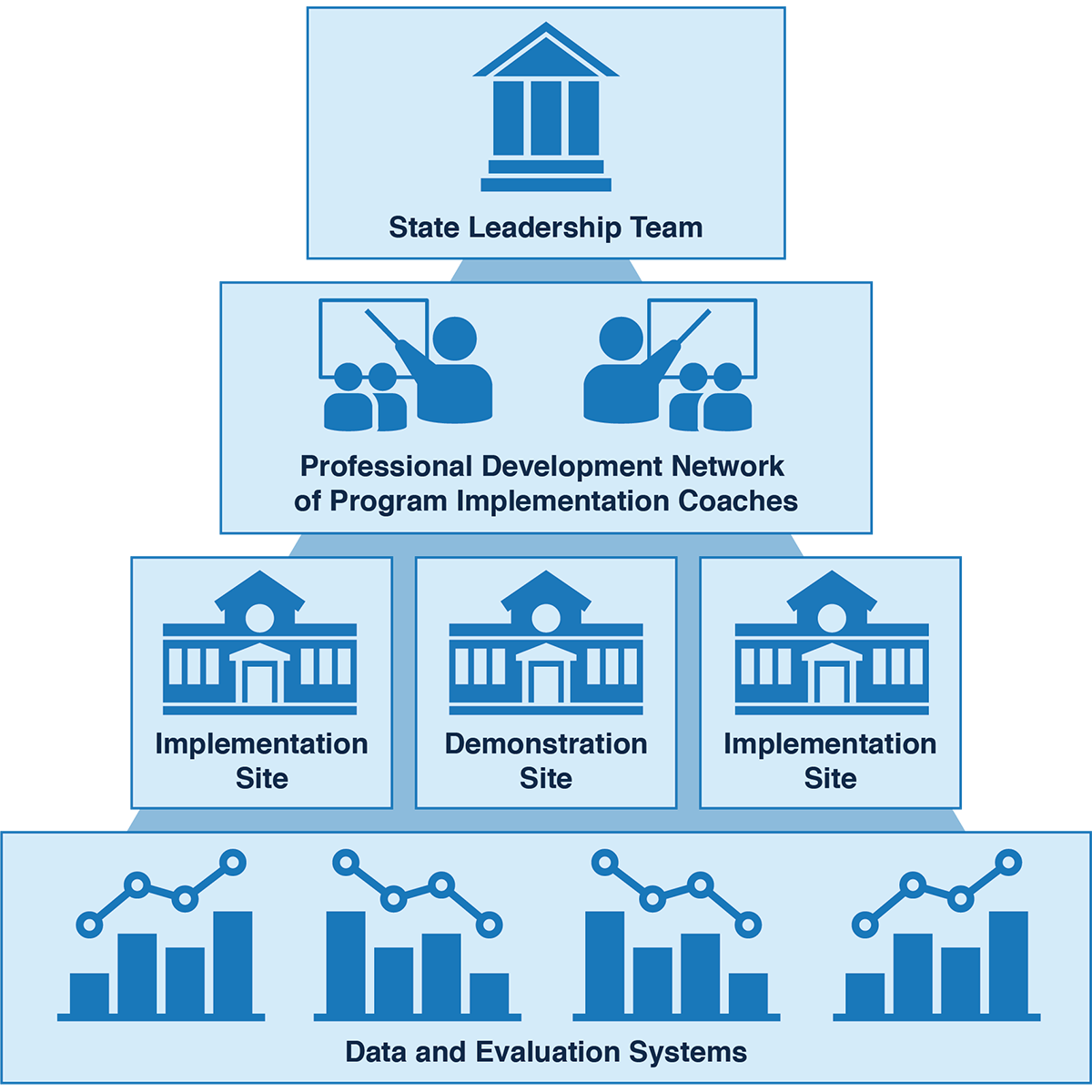
ECTA Center technical assistance included guidance in establishing the essential support structures for statewide implementation. With this structural foundation, the state team used a cohort model of process rollout by engaging two to three volunteer programs (implementation sites) that expressed interest and readiness to adopt the changing practices. Local program administrators and practitioners (implementation teams) were organized to receive training on family engagement practices, guide system and practice change, collect data and monitor rollout.
In New Hampshire, Northern Human Services (NHS) participated in the first cohort and remained engaged throughout. NHS was essential to the success of the initiative because they tested the tools and practices and challenged established norms to be sure that the program worked for them and other programs, creating a data collection, evaluation, and re-design feedback loop.
When practices were deemed too burdensome, they asked how the work could be condensed to meet their program needs without losing the original intention of the work. Once family engagement practices were established in the NHS program, the state team identified a second cohort of local programs to begin SEE Change training and rollout.
The NHS site became a demonstration site for these programs. Likewise, NHS leadership team became program coaches, providing TA and support to newly engaged local programs. This cohort process of SEE Change engagement and implementation continued through 2022, when all local programs were actively trained in and practicing family engagement practices.
SEE Change Challenges and Solutions
Throughout the development, implementation, and scale-up process, there were numerous challenges and barriers.
Resistance to Change
Challenge
Providers were accustomed to traditional "toy bag" visits and hesitant to adopt coaching and family engagement. Many families expected to sit on the couch and observe during visits.Solution
Emphasized peer-to-peer mentoring and shared success stories to build buy-in; introduced visuals, for example, time-with-family versus provider graphs, to demonstrate impact.Abstract and Cumbersome Concepts
Challenge
Programs struggled to understand the recommended practices and apply them to real-world settings.Solution
Created a continuous feedback loop; TA tailored materials to make them more concrete and manageable and condensed paperwork without losing core practices.Leadership Turnover
Challenge
Frequent changes in directors disrupted continuity and weakened momentum, requiring retraining and re-energizing staff.Solution
Built internal capacity for training; embedded SEE Change into administrative rules and onboarding requirements, for example, complete training within 6 months of hire.COVID-19 Pandemic
Challenge
Sheltering created logistical barriers for in-home visits and family coaching but also reinforced the importance of family engagement.Solution
Adapted to virtual and outdoor coaching; used dolls for demonstrations; leveraged prior SEE Change training to maintain engagement.Data Collection Burden
Challenge
Process monitoring required programs to collect extensive data, which was overwhelming.Solution
Reduced data collection requirements while maintaining peer-to-peer coaching and qualitative feedback loops.Disparity Concerns
Challenge
Data revealed variations in child outcome metrics with some demographics showing greater improvement compared to others.Solution
Identified need for parity-focused adjustments, such as provider availability; ongoing monitoring of family outcomes survey and child outcomes summary data for improvement.Scaling and Sustainability
Challenge
Over time, the state team ran out of volunteers for the program, leading to a shift from voluntary participation to mandatory implementation.Solution
Made participation mandatory; implemented peer-to-peer and cohort-based training. SEE Change principles are now embedded in PD structures and administrative rules.Key Features of Program Success
In addition to the pivotal role played by NHS in the success of this initiative, the New Hampshire state team consistently expressed appreciation for the collaborative design of this work among state administrators, local program staff and practitioners, and TA providers. For example, the New Hampshire State Team modeled shared leadership by pulling program administrators from pilot sites into the state leadership team to ensure the local perspective was known throughout the process.
This partnership model helped to ensure that ECTA adapted natural resources to local context, which changed across programs. Likewise, the training resources were an essential part of modifying established beliefs and behaviors. By training and orienting practitioners and caregivers to recommended practices to improve family engagement, provider-family buy-in was obtained. Without this buy-in from both groups, the program's success was not possible.
NH staff noted:
"The family is the expert on the child and spends most of their time with the child; the provider is the expert on development and typically seen once a week."
As such, the key players, caregivers in the child's learning, must see and understand the strength and power of their respective roles and act accordingly.
Capacity Building
Capacity building was realized on three fronts:
- Family caregivers were coached on how to support their child's development through daily routines and activities.
- New cohorts of local program administrators and staff were coached and mentored to institutionalize the relevant practices and procedures.
- State staff gradually took over technical support functions previously offered by ECTA staff.
Professional Development
Professional development was encouraged through local programs attendance at the DEC Conference where the importance of the recommended practices is a recurring theme.
Sustainability
Sustainability of this work required careful planning to maintain practice fidelity through scale-up.
Impact and Benefits
When asked to identify the most significant change realized as a direct result of this TA support process, the New Hampshire state team said:
"Most families are fully engaged in supporting their child's development based on unsolicited anecdotal testimony, which shows up in the FOS [family outcomes survey] and COS [child outcomes survey] data…
For example, FOS comments from families now include their knowledge of their child's development and their confidence in their ability to support their child vs previous years of comments about how the practitioner increased the child's development.
Through this work, we have set families up to be more engaged in their IEP team based on their [strong] engagement with their IFSP team. [This trend] is consistent across all local programs. When programs were going through [practice improvement], we saw differences in reporting, with lower outcomes [realized] from those programs without SEE Change.
Now, we are seeing strong feedback across the state. The data is strong and shows increased engagement [across the board]."
The impact of this change is seen in state and local programs through:
Family Empowerment and Engagement
Family outcome summary results and unsolicited comments are stronger in showing how the program has supported families to enhance their child's development. These comments are consistent across the state.
Enhanced Practitioner Competence and Fidelity
Providers gained skills in adult learning strategies and coaching. This moves from traditional "toy bag" visits to collaborative partnerships with families. Data reported by caregivers show that they are using the RPs.
Sustainable System Change
SEE Change practices were embedded into state policies, onboarding requirements, and administrative rules, ensuring consistency and long-term sustainability across all programs.
Cost Efficiency
The need for intensive direct services decreased because parents, as their child's primary educator, were equipped. This allowed more families to be served with fewer resources.
Positive Data Trends
Family outcome surveys and child outcome summaries showed stronger engagement and empowerment. This was validated by rich anecdotal feedback filled with empowerment statements and improved metrics statewide.
Resilience During Crises
Programs that implemented SEE Change before COVID adapted more successfully to virtual and outdoor coaching, maintaining fidelity, and family engagement during disruptions.
Foundational Work
SEE Change is the foundation the state is building on to further reinforce coaching and family engagement practices through initiatives like the Pyramid Model.
Lessons Learned
The SEE Change Initiative, built on coaching and collaborative practices, evolved over seven years to become a fully integrated statewide model that significantly improves family engagement and child development outcomes. New Hampshire learned powerful lessons that can benefit other EI programs that target statewide implementation of DEC Recommended Practices.
Champions are Essential to Success and Sustainability
NHS championing the New Hampshire statewide rollout was game-changing. Also, new providers onboarding with training slides often become champions who brought renewed energy and continuous improvement to the work.
Family Engagement is Central
Moving from the "toy bag" model to a coaching approach transformed EI. Families became active partners who helped improve child outcomes thereby reducing the need for intensive direct services.
Practitioner Mindset Shift is Critical
Providers traditionally focused on working with children not families. SEE Change highlighted the importance of adult learning strategies and building provider capacity to coach families effectively.
Responsive TA Drives Success
Continuous feedback loops and tailored TA were essential. TA providers adapted resources, condensed paperwork, and made abstract concepts concrete. These measures kept programs engaged and reduced the burden of implementation.
Peer-to-Peer Support Strengthens Implementation
Mentorship between programs and peer coaching helped overcome resistance and sustain momentum. Practitioners who initially resisted became strong advocates after seeing positive results.
Responsive TA and Coaching Lead to Strengthened Capacity
TA providers ensured that training and coaching support were practical, scalable, and aligned with state priorities. Over time, state staff took ownership of local program support which facilitated long-term sustainability.
Scale-Up Requires Policy Integration
Voluntary participation worked initially, but statewide adoption required embedding SEE Change into administrative rules and onboarding requirements. Mandatory training ensured consistency and sustainability.
Adaptability During Crises Matters
COVID-19 reinforced the importance of family engagement and flexibility. Programs that had implemented SEE Change before the pandemic were more successful in maintaining services under restrictions.
Data and Stories Validate Impact
Rich qualitative data and family and provider testimonials demonstrated increased empowerment and improved outcomes. These stories motivated programs and reinforced the value of the approach.
Underserved Communities Need Ongoing Attention
Outcome disparities by race and gender emerged. This showed that strategies focused on the needs of underserved communities must be integrated into future work.
Conclusion
The SEE Change Initiative fundamentally transformed EI practices in New Hampshire by shifting the focus from provider-driven services to family-centered coaching and engagement. This approach empowered families to become active partners in their child's development, which resulted in improved child outcomes, stronger family confidence, and greater satisfaction with services.
SEE Change provided a framework for sustainable improvement, fostering collaboration between state leadership, programs, and families. It showed that responsive TA, peer support, and policy integration are critical for scaling evidence-based practices and achieving meaningful outcomes for children and families.