
Personnel Development
The Early Childhood Personnel Center (ECPC) funded by OSEP produces data reports, literature syntheses and reviews for all professional disciplines serving children with disabilities age birth to five and their families, among other resources.
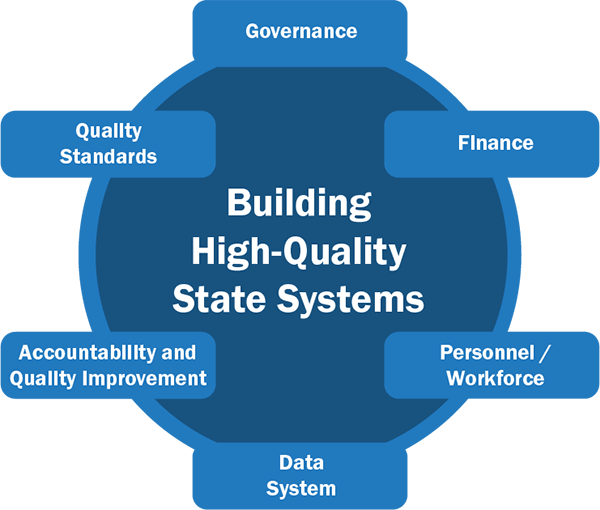
ECTA System Framework: Personnel/Workforce Component
This component guides states in the planning, development, implementation and evaluation of a comprehensive system of personnel development (CSPD). This component is the primary mechanism by which the state ensures that infants, toddlers, and young children with disabilities and their families, are provided services by knowledgeable, skilled, competent, and highly qualified personnel, and that sufficient numbers of these personnel are available in the state to meet service needs.
Get StartedOSEP Resources
Selected National Centers
- Early Childhood Personnel Center
- National Professional Development Center on Inclusion (NPDCI)
- National Center to Inform Policy and Practice in Special Education Professional Development (NCIPP)
- IRIS Center
National Data
- State-Level IDEA Data Files present the most recent State-reported personnel data available collected by the U.S. Department of Education, Office of Special Education Programs as required under Section 618 of IDEA.
- Teachers employed (FTE) to work with children, ages 3 through 5, who are receiving special education under IDEA, Part B, by qualification status and state.
- Paraprofessionals employed (FTE) to work with children, ages 3 through 5, who are receiving special education under IDEA, Part B, by qualification status and state.
- Personnel employed (FTE) to provide related services to children and students ages 3 through 21 under IDEA, Part B, by certification status and state.